
Edited by:
redazione
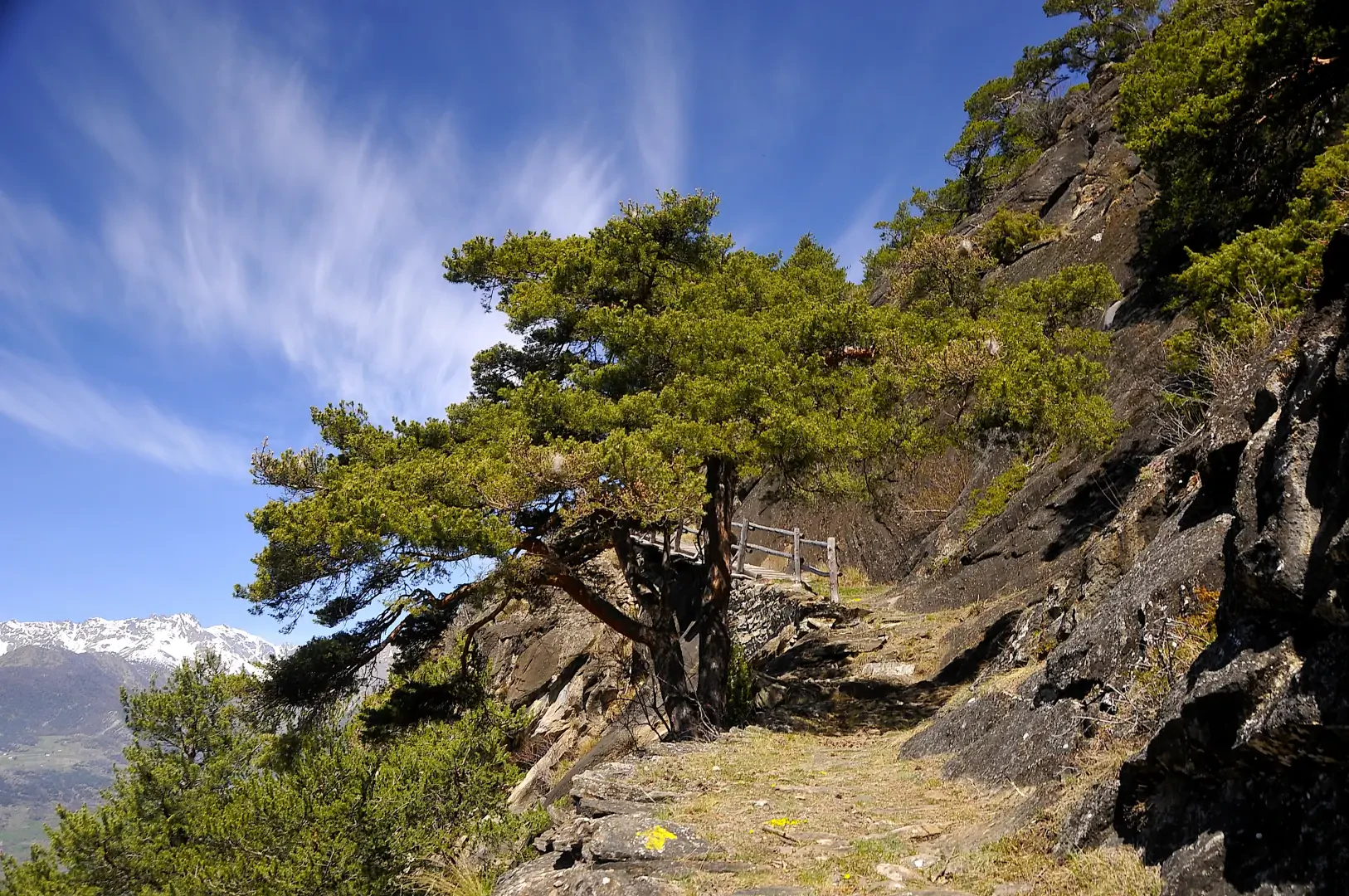
The Scots pine (Pinus sylvestris) is one of Europe’s most fascinating and hardy conifers, capable of adapting to harsh climates and poor soil, with a slender silhouette that stands out against the mountain sky. This species belongs to the Pinaceae family and is easily recognisable by its straight trunk and characteristic reddish bark at the top, which flakes off in thin sheets, creating a striking colour contrast with the lower part, which is darker and more rugged.
Reaching a height of between 20 and 40 metres, the Scots pine has a spreading, irregular crown, with branches that extend horizontally and tapered needles, approximately 4–7 cm long, arranged in pairs. These needles, with their characteristic bluish-green colour, represent an evolutionary strategy to reduce water loss and withstand the fierce winds at high altitudes. Its flowers, if they can be called that, are in fact reproductive structures: the male cones produce pollen in spring, whilst the female cones, destined to become the typical woody cones, mature over the course of two years before releasing their winged seeds.
The range of the Scots pine extends from the boreal regions of Scandinavia to the mountains of the Mediterranean, spanning much of Eurasia. In Italy, it is widespread along the Alps and the northern Apennines, often from an altitude of 1,000 metres, where it forms light-filled forests that smell of resin and mountain undergrowth. Its ability to colonise poor, rocky or sandy soils makes it a pioneer of nature, often the first tree to recolonise abandoned areas or those subject to extreme weather events.
From a taxonomic point of view, Pinus sylvestris is one of the many species of the genus Pinus, which includes over a hundred varieties of pine scattered across the globe. What distinguishes it from its relatives is precisely the colour and texture of its bark, as well as its exceptional resistance to the cold. Some particularly long-lived specimens are living witnesses to our planet’s climatic history: in Sweden, for example, a Scots pine nicknamed ‘Old Tjikko’ has been dated to over 9,500 years, making it one of the oldest trees in the world.
Despite its resilience, the Scots pine is not immune to threats. Deforestation, the spread of invasive alien species and climate change are putting its habitat at risk, especially in areas where drought is becoming more severe. However, many Scots pine forests are now protected and managed for their ecological importance, ensuring the future of this precious species.
From a practical point of view, the Scots pine is a valuable resource for humans: its timber, which is light and durable, is widely used in joinery and carpentry, whilst its resin has historically been used to produce turpentine and tar. Folk medicine has also made use of its properties: the buds and needles are rich in essential oils with balsamic and antiseptic properties, perfect for infusions and inhalations that help combat colds and respiratory ailments.
The Scots pine is, in short, much more than just a tree: it is a symbol of resilience and adaptability, a green giant that tells the story of ancient landscapes and continues, silently, to shape our environment. Whether in a snow-covered forest or on a barren, windswept hill, its presence is a sign of untamed nature, capable of facing the challenges of time with the strength of its roots and the breath of its foliage.